
Tradeel review shows a high-risk profile: the platform discloses an offshore MISA licence, but does not confirm supervision by the FCA, BaFin, CySEC, or another EU/UK regulator. The domain was created on June 25, 2025, while the claimed leverage of up to 1:1000 looks highly risky for a retail client. Further concerns include a disputed regulatory framework, incomplete fee and execution disclosure, strict Terms, and a limited independent reputation footprint.
How We Reviewed Tradeel
We prepared this Tradeel analysis as an editorial review of a financial platform that promotes online trading in currencies, CFDs, cryptocurrencies, stocks, indices, commodities and ETFs. We looked not only at what the company says about itself on its website, but also at how far those statements are supported by legal data, the domain footprint, terms of service, regulatory information and user reviews.
As part of the review, we compared:
- data from the official website;
- ICANN Lookup information;
- public WHOIS/RDAP data;
- the company’s legal documents;
- Companies House materials;
- information on Mwali International Services Authority;
- review platforms;
- public user feedback.
This approach helps separate marketing promises from verifiable facts.
The main question of this article is whether Tradeel can be considered transparent for the European market. Based on our review, we found no grounds to describe fraud as an established fact: we did not identify an accessible court decision or an official warning from a European regulator specifically naming this company. However, the combination of indicators points to high risk and weak legal transparency.
What Tradeel Says About Itself
On its website, the company describes itself as an online platform for accessing global markets. The listed markets include Forex, stocks, indices, cryptocurrencies, commodities and ETFs. Tradeel also promotes web trading, mobile trading, copy trading, a demo account, trading signals, an economic calendar and a crypto calendar.
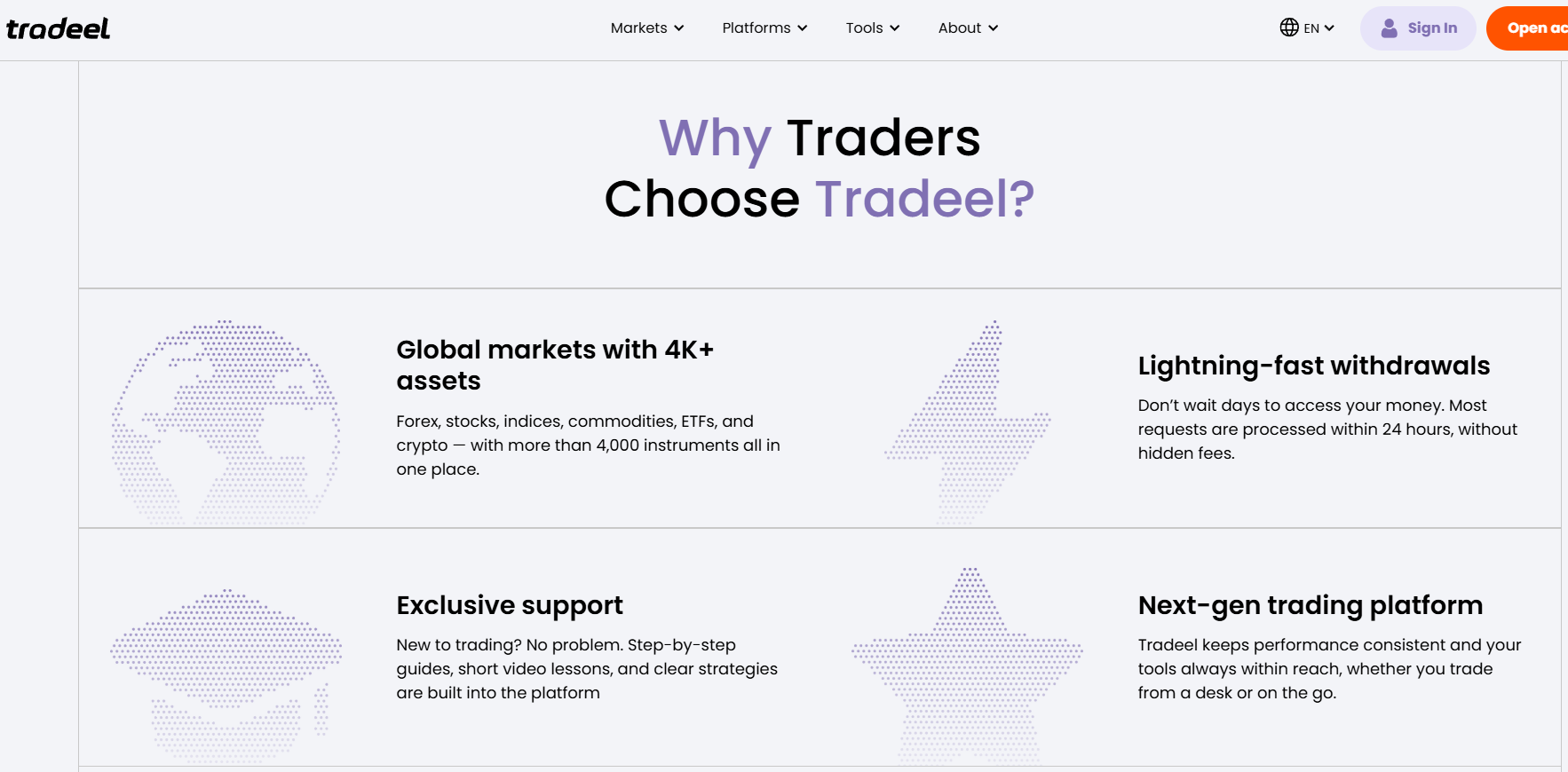
In its marketing sections, the website promises more than 4,000 trading assets, fast withdrawals, professional support and educational materials for beginners. Flexible leverage of up to 1:1000 is mentioned separately. For a retail client in the EU, this is an important risk factor: European CFD practice usually limits leverage much lower, from 30:1 to 2:1 depending on the underlying asset.
Legally, the website discloses Tradeel LTD as a company with the address Bonovo Road, Fomboni, Island of Moheli, Comoros Union, registration number HT01025104 and a Mwali International Services Authority license under number BFX2025129. At the same time, we did not see disclosed licenses from the FCA, BaFin, CySEC or another EU, EEA or UK regulator on the website.
Tradeel.com Analysis: Domain Check Through ICANN Lookup
To check the domain, we used ICANN Lookup – the official ICANN service. In simple terms, it allows users to view basic registration data: the domain creation date, registrar, registration expiry date, nameservers and some technical information. We also cross-checked the domain data through public WHOIS/RDAP sources.
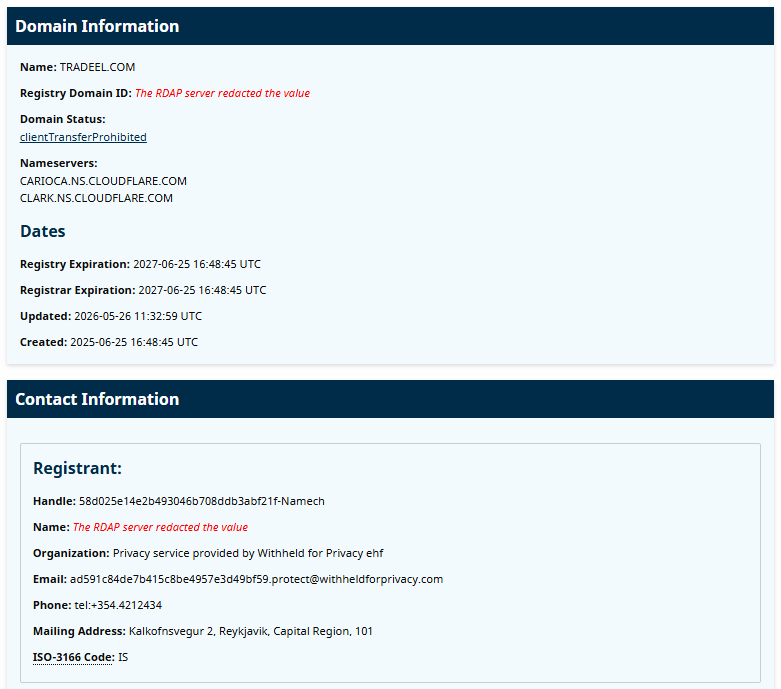
This approach helps verify basic technical data when some information is hidden by registrar privacy settings.
| Parameter | What the analytical data shows | Why it matters |
| Domain | tradeel.com | The platform’s main public website |
| Creation date | 25 June 2025 | A short history limits reputation checks |
| Registrar | NameCheap | A neutral technical fact |
| Owner data | hidden by privacy protection | Not a violation by itself, but a transparency drawback for a financial service |
| Nameservers | Cloudflare | Common CDN infrastructure, but it hides part of the server footprint |
Taken together, the domain checks show a young domain footprint and do not provide a long brand history. For a financial company, this is not independent proof of misconduct, but it limits verification: the domain has fewer archived versions, fewer independent mentions and a shorter period for assessing reputation stability.
Tradeel Trading Conditions: Fees, Deposits and Disclosure Gaps
The tradeel.com website does not provide a complete account-type table such as Standard, Pro or VIP with exact commissions, spreads and execution conditions. Instead, it has a deposits and withdrawals page, as well as separate provisions in the Terms and Conditions.
| Parameter | What is stated |
| Minimum deposit | 100 USD / EUR / GBP / CHF |
| Minimum withdrawal | 20 USD / EUR / GBP / CHF |
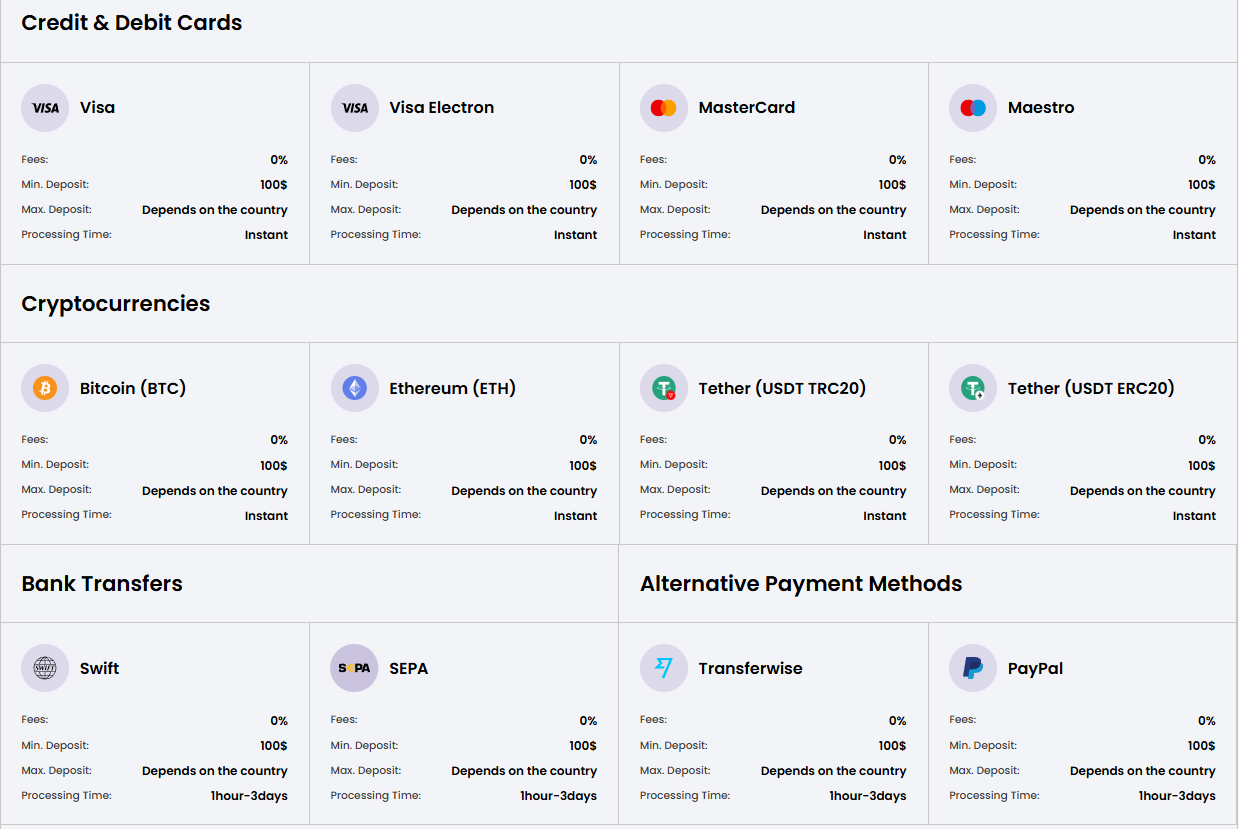
| Payment methods | Visa, Visa Electron, MasterCard, Maestro, Bitcoin, Ethereum, USDT TRC20/ERC20, SWIFT, SEPA, Transferwise, PayPal |
| Website deposit fee | 0% |
| Crediting time | cards and cryptocurrencies – instant; bank transfer/SEPA/Transferwise/PayPal – from 1 hour to 3 days |
| Leverage | up to 1:1000 |
| Platform | proprietary web/mobile platform, copy trading, demo account |
The deposits page on the Tradeel website lists a minimum deposit of $100 and different funding methods, including cards, cryptocurrencies, SWIFT, SEPA, Transferwise and PayPal. The Terms also mention a minimum deposit of 100 and a minimum withdrawal of 20 in major currencies.
However, the key parameters needed to assess trading costs are weakly disclosed. We did not find a complete public table of typical spreads by instrument, asset-class commissions, the order execution model, a list of liquidity providers, execution quality statistics or a clear description of negative balance protection.
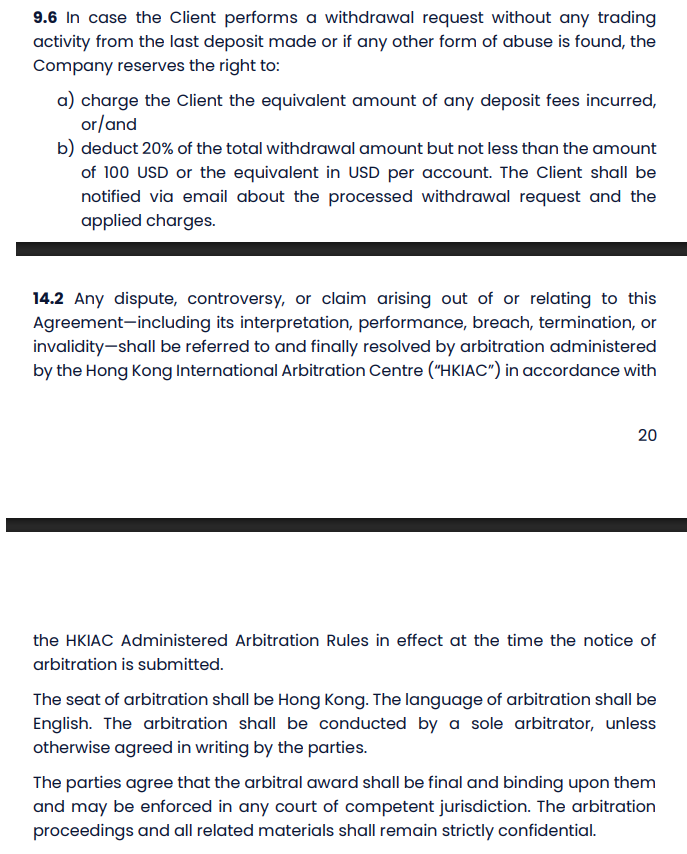
The Tradeel contractual terms are especially important. The Terms state that if a withdrawal is made without trading activity after a deposit, the company may withhold 20% of the withdrawal amount, but not less than 100 USD. After 60 days without trading activity, a monthly charge of 100 USD or equivalent may apply. The Terms also provide for HKIAC arbitration in Hong Kong, English as the language of proceedings and a complaint filing period of 7 business days after the disputed event.
Regulatory Footprint and Legal Transparency
The main legal framework disclosed by the website is linked to Moheli, Comoros. The company refers to MISA license BFX2025129 as an International Brokerage and Clearing Company.
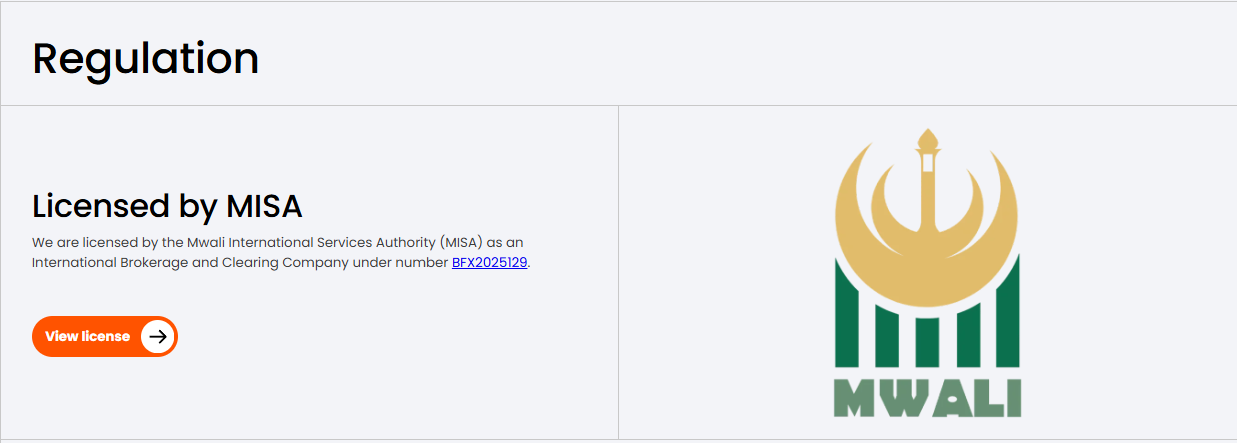
For a European client, the key question is not only whether a license number exists, but what level of protection that jurisdiction provides. The Comoros Ministry of Finance published a notice from the Central Bank of Comoros in which Mwali International Services Authority is listed among entities claiming to issue authorisations to banks and financial institutions. The Central Bank states that such entities act illegally and that the authority to license financial institutions belongs to the Central Bank itself.
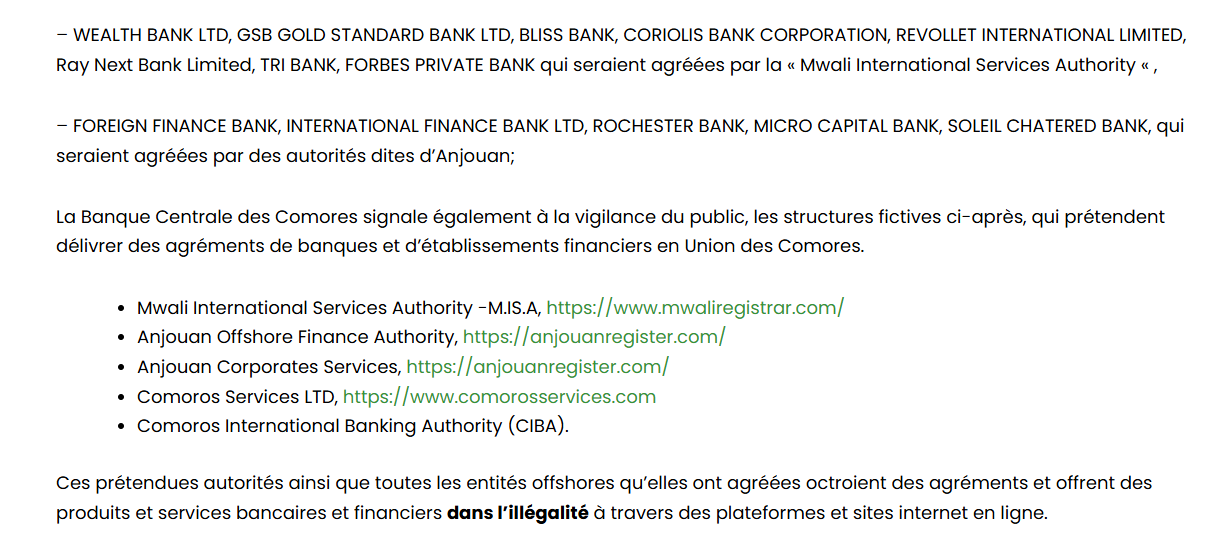
This does not automatically amount to a judicial conclusion about the status of this particular platform, but for an editorial analysis it is a strong risk factor. We believe that a reference to MISA cannot be equated with supervision at the level of the FCA, BaFin or CySEC.
Public data also shows a UK company TRADEEL LIMITED with number 16604689. Companies House shows that it was incorporated on 24 July 2025 at Dept 6147, 196 High Road, Wood Green, London, United Kingdom, N22 8HH; its status is active; and its business activities include financial intermediation and financial management.
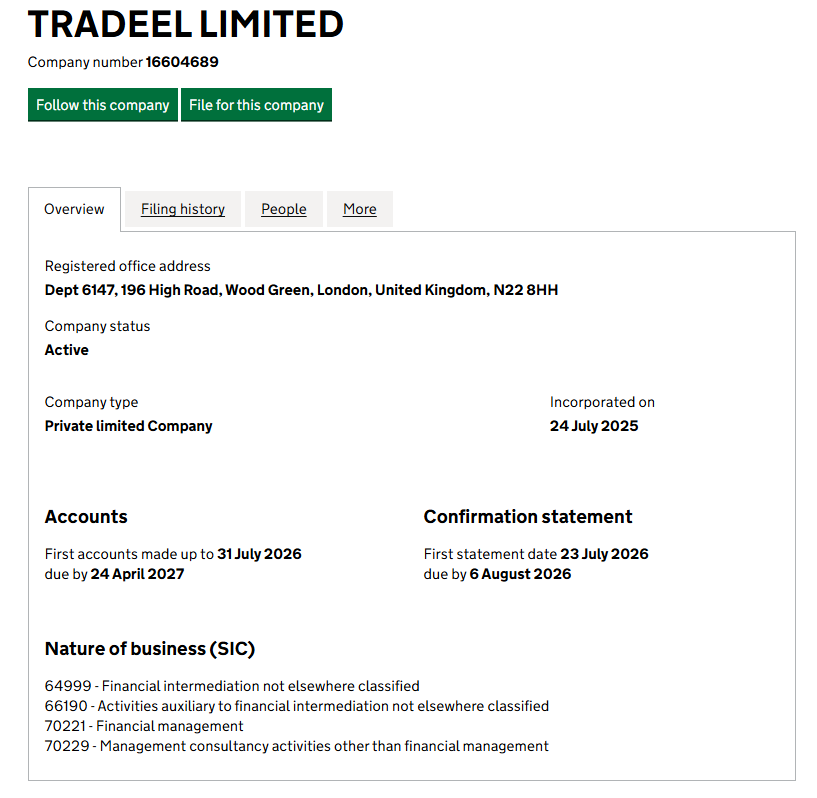
This finding should not be overstated. The website discloses the Comoros-based Tradeel LTD, not the British company as a licensed operator. Therefore, this link cannot be considered established without additional documents directly connecting the UK legal entity to the website operator. Registration with Companies House also does not constitute a license to provide investment services.
Tradeel Reviews: What Can Be Seen on Online Platforms
The company’s reputational footprint currently looks mixed. On Trustpilot, the tradeel.com page shows 14 reviews and a rating of 4.1 out of 5; all published scores are in the 4-5 star range. It is also stated that the company invites clients to leave reviews, so this profile looks more like an early reputation layer than a mature record of client experience.
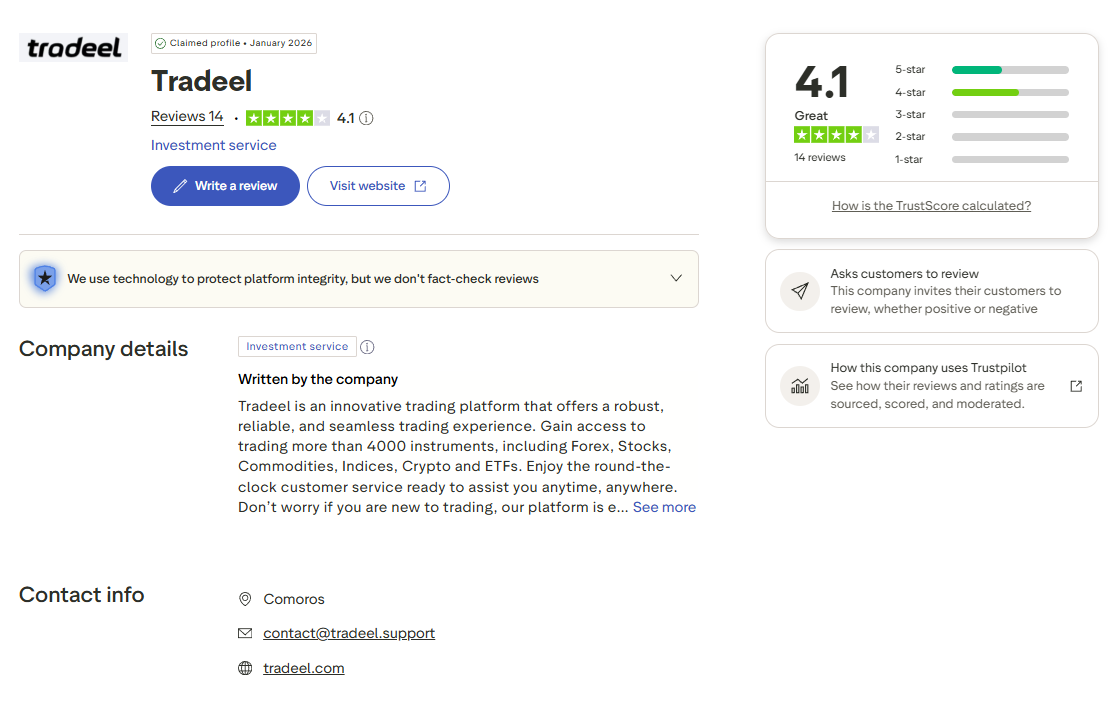
In terms of content, users more often mention the demo account, platform convenience, copy trading, support and the choice of instruments. But for a financial company claiming a broad international audience, 14 reviews are too small a sample. Therefore, reviews of tradeel.com cannot be treated as sufficient confirmation of platform reliability.
On WikiFX the picture is noticeably harsher: the profile shows Not Regulated status, a low score of around 1.08 and a warning about high potential risk. At the same time, WikiFX is not an official regulator, so its assessment does not prove violations. Still, as part of a Tradeel review, this profile is important as an additional reputation signal.
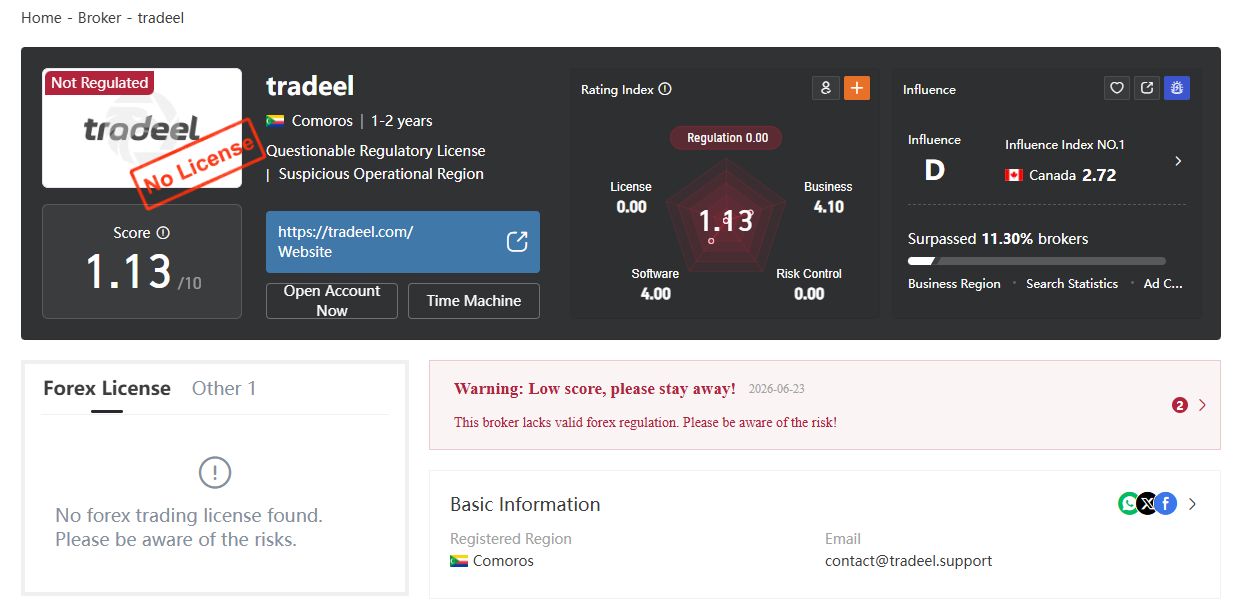
Some review sources also mention complaints about withdrawal delays, additional payments, spreads and terminal performance. We treat such publications cautiously: they add to the broader risk picture, but they are not an officially established fact of violations by the company.
What the Overall Facts Show
If we look not at one isolated indicator but at the full picture, Tradeel looks high-risk. This is especially relevant for a client accustomed to European-level regulation, compensation schemes, leverage limits and clear fee disclosure.
| Factor | Why it matters |
| Offshore MISA license | Not comparable in protection level with the FCA, BaFin or CySEC |
| Central Bank of Comoros position on MISA | Calls the reliability of this regulatory basis into question |
| Leverage up to 1:1000 | Significantly above EU protection standards for retail CFD clients |
| Young domain footprint | Less history and less data for reputation checks |
| Incomplete disclosure of trading conditions | Makes it impossible to accurately assess trading costs and execution model |
| Strict Terms conditions | Withholding provisions, inactivity fee, short complaint period and HKIAC |
| Small number of reviews | The Trustpilot profile does not provide a mature reputation picture |
| Low WikiFX score | Not proof of a violation, but an additional risk indicator |
| UK company with a similar name | An interesting lead, but the connection with the website operator needs separate verification |
In this context, the Tradeel analysis shows not one isolated weakness, but a set of indicators: offshore jurisdiction, aggressive leverage, weak disclosure, a disputed regulatory framework and limited independent reputation.
Tradeel Pros and Cons
-
the website discloses the legal name, Moheli address and MISA license number;
-
public legal documents are available, including Terms and Conditions;
-
the website offers a demo account, copy trading, a web platform and educational materials;
-
no EU, EEA or UK licenses are disclosed;
-
MISA as a regulatory framework raises serious questions in light of the Central Bank of Comoros position;
-
the claimed leverage of up to 1:1000 looks excessively risky for a retail client;
-
there is no transparent table of spreads, commissions, swaps and execution model;
-
the Terms contain provisions that may be unfavorable to the client;
-
there are few reviews, and the reputational footprint looks young;
-
WikiFX indicates a low rating and Not Regulated status;
-
the connection with a UK company with a similar name is not disclosed on the website as a licensed European framework.
We did not find confirmed advantages that could offset these risks.
Editorial Conclusion
Our editorial conclusion is that Tradeel cannot be described as a transparent and reliably verified platform for a European client. The company has a website, legal documents and a declared offshore license, but this is not enough to remove the key concerns.
We see signs of an unregulated or weakly regulated broker: no disclosed EU/UK supervision, a disputed offshore regulatory framework, leverage of up to 1:1000, strict contractual terms, incomplete disclosure of trading parameters and a limited independent review footprint.
The correct formulation is this: fraud has not been established, but the risk of losing funds is assessed as high, and the level of transparency is insufficient for a cautious investor. Therefore, our position remains cautious: the platform requires enhanced due diligence, and a potential client should evaluate not only marketing promises, but also the legal framework, contract terms and real regulatory protection.


How many companies like this appear every day? 5-10, and all of them say they are the best and most profitable. At least someone should get real license and work legally. I already lost money in companies that came before Tradeel. I don’t want to repeat this negative experience. I recommend everyone to deal only with official companies!
i started checking Tradeel by myself too, because this company looked strange and not safe to me. This overview helped me to make my decision! The website shows license from MISA, but I don’t see any real regulation rules in EU or UK. Leverage up to 1:1000 is also a huge warning signal for retail clients. Maybe the platform looks modern, but legal protection seems very weak.